Your electric gate worked fine yesterday. Today it won’t budge. Before you panic and assume you need a complete replacement, understand this: most gate failures come down to four things power issues, misaligned sensors, dead batteries, or worn mechanical parts.
Let’s walk through what’s actually causing the problem and what you can fix yourself versus when to call someone who does this every day.
The Most Common Reasons Electric Gates Fail
I’ve diagnosed hundreds of gate issues in Franklin, and the same culprits show up repeatedly. Here’s what typically goes wrong:
| Problem | Symptoms | DIY Fix? |
|---|---|---|
| Dead backup battery | No response, no motor sound | Yes — replace battery |
| Sensor obstruction | Gate reverses immediately or won’t close | Yes — clear the path |
| Transmitter issue | Remote doesn’t work, keypad does | Maybe — replace battery or reprogram |
| Power loss at operator | Complete silence, no lights | Check breaker first |
| Motor failure | Clicking sound, no movement | No — needs replacement |
| Track obstruction | Gate stops mid-cycle | Yes — remove debris |
Quick Checks You Can Do Right Now
Before calling anyone, run through these tests. They take five minutes and solve the problem about 40% of the time.
Check the Power Source
Walk to your gate operator box. Is there a light on? If not, check your breaker panel. Electric gates usually run on a dedicated circuit. Flip the breaker off and back on.
If the gate still has no power, check the GFCI outlet if your system uses one. Hit the reset button.
Inspect the Photo Eyes
Look at the sensors on either side of your gate opening they’re usually about 6 inches off the ground. Are they aligned? Is anything blocking the beam between them?
Wipe them clean with a dry cloth. Spider webs, dirt, and even heavy pollen can block the signal and prevent your gate from closing.
Test Your Remote and Keypad Separately
Does the keypad work but the remote doesn’t? Replace the remote battery. Still nothing? The remote likely needs reprogramming or replacement.
If neither works, the problem is with the gate operator itself, not your transmitters.
When the Problem Is the Backup Battery
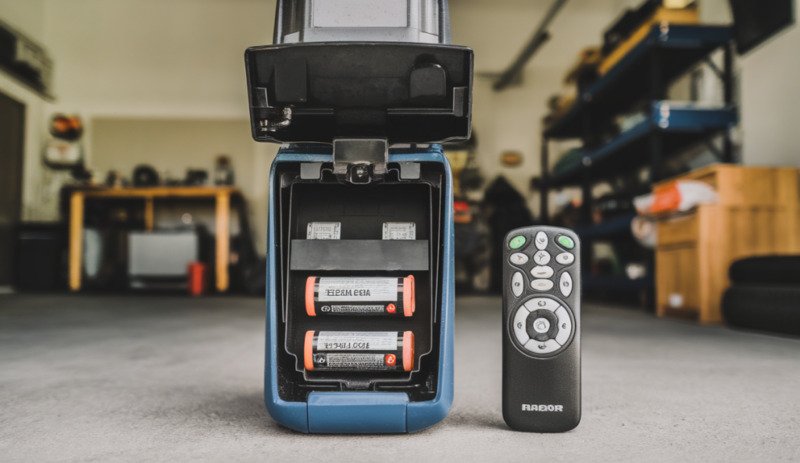
Most electric gate systems have a backup battery that keeps the gate functional during power outages. These batteries typically last 3-5 years, then die without warning.
If your gate has power but won’t respond, and you hear faint clicking from the operator box, the backup battery is likely dead. You can replace it yourself they’re available at hardware stores or we can swap it during a service call.
Mechanical Issues That Stop Gates Cold
Sometimes the electronics are fine, but the gate physically can’t move. Here’s what to look for:
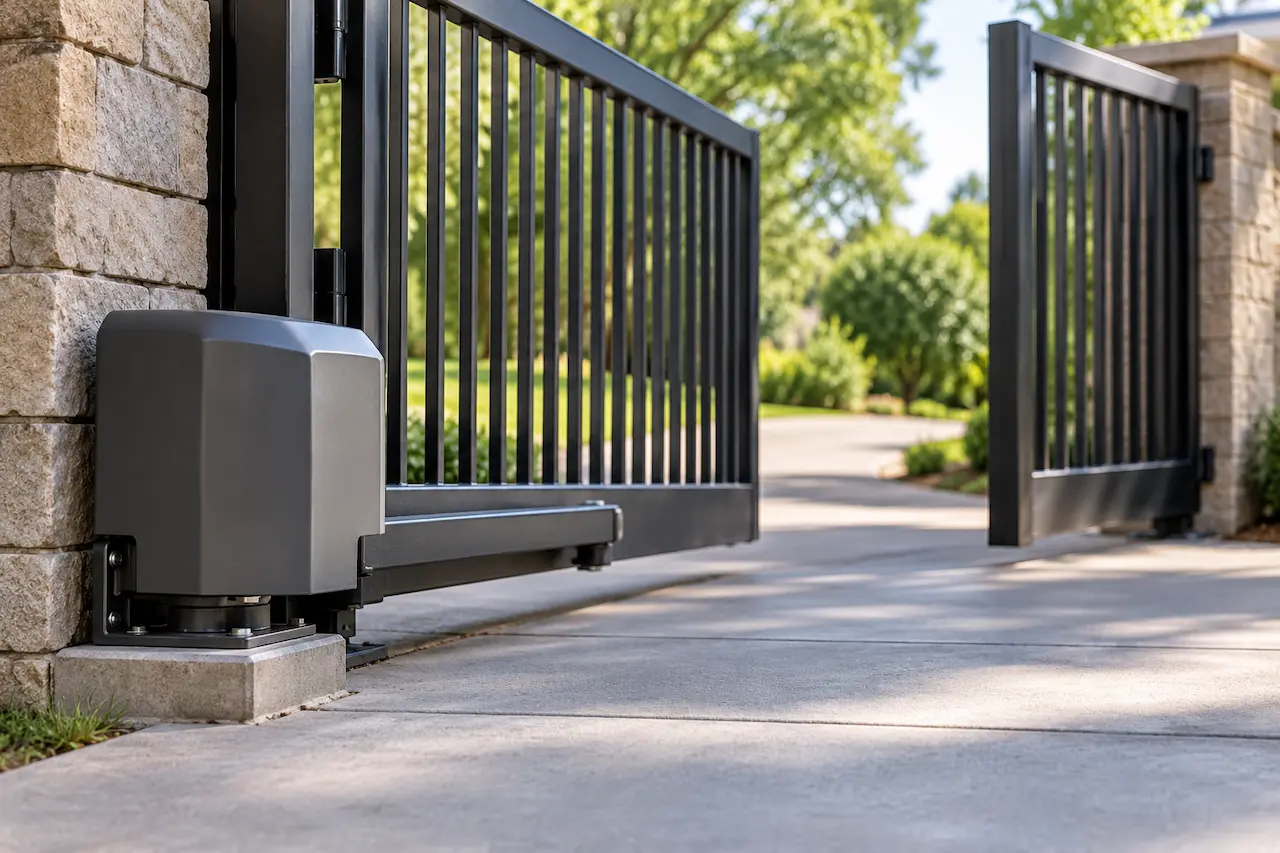
- Track obstructions — rocks, sticks, ice buildup in winter, or even a shifted foundation stone can jam a sliding gate
- Wheel or roller wear — if the gate makes grinding noises or moves slower than usual, the wheels may be worn down or rusted
- Chain or belt slack — chain-driven gates need periodic tension adjustment; too loose and the motor spins without moving the gate
- Hinge problems — swing gates with rusty or damaged hinges will bind up or refuse to move
You can clear debris and lubricate hinges yourself. Wheel replacement and chain tensioning require the right tools and experience.
Control Board and Limit Switch Problems
If your gate opens but won’t close, or closes but won’t open, the limit switches may need adjustment. These tell the operator when the gate has reached the fully open or fully closed position.
I don’t recommend adjusting these yourself unless you have experience with gate systems. Set them wrong and the gate will stop in the wrong position every time, or worse keep trying to move past the endpoint and damage the motor.
When You Should Call Instead of DIY
Don’t mess with motor or gearbox repairs, electrical wiring beyond checking breakers, control board diagnostics, or welding and structural repairs. Electric gate operators have capacitors that can hold a charge even when unplugged.
Frequently Asked Questions
Why does my gate work sometimes but not others?
Intermittent failures usually mean a loose wire connection, a transmitter with a weak battery, or a sensor that’s borderline dirty. Temperature changes can also affect marginal connections something works fine in the afternoon but fails in the cold morning.
Can I manually open an electric gate?
Yes. Every gate operator has a manual release usually a key slot or lever on the operator box. Turn or pull it to disengage the motor, then you can push the gate open by hand. Check your owner’s manual for the exact location and method.
How much does electric gate repair cost in Franklin?
Service calls start around $125-175 for diagnosis. Simple fixes like sensor realignment or battery replacement run $150-250 total. Motor replacement or control board issues typically cost $400-800 depending on the system.
Will my gate still work if the power goes out?
Only if you have a backup battery installed and it’s in good condition. The battery keeps the gate functional for 10-20 cycles depending on the size of your gate. Without a battery, you’ll need to use the manual release.
Ready to get started in Franklin?
Nash Garage Door is here to help with electric gate not opening in Franklin. Reach out today and we’ll walk you through your options, answer your questions, and book a time that works for you.
Call (615) 716-3553 or visit Nash Garage Door to schedule your Franklin appointment.